
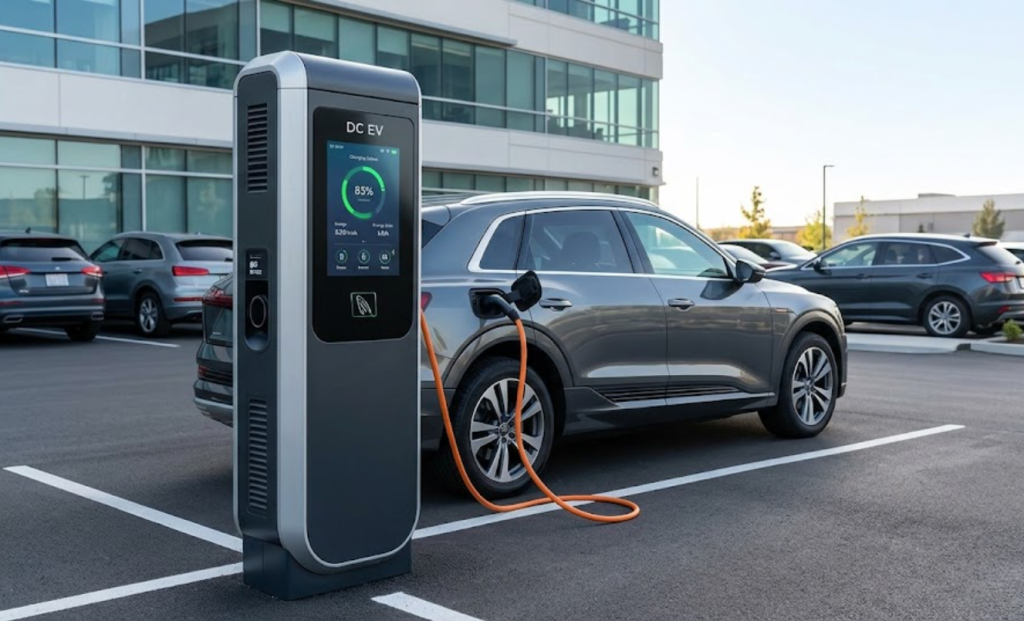
As the global transition to electric mobility accelerates, the infrastructure supporting it must keep pace. For businesses managing electric vehicle (EV) fleets, the bottleneck is often charging time. A DC battery charger station serves as the backbone of an efficient fleet, transforming how organizations manage energy and reduce vehicle downtime. Unlike standard AC chargers that rely on the vehicle’s onboard converter, DC fast chargers deliver power directly to the battery, significantly cutting charging cycles from hours to minutes.
The Technical Advantage of DC Fast Charging
The primary benefit of a high-end DC battery charger station lies in its ability to bypass the onboard charger (OBC) limitations of an electric vehicle. Because the energy conversion from alternating current (AC) to direct current (DC) happens within the charging station itself, the vehicle can accept a higher power input. Modern units, such as those designed for commercial and fleet use, often feature modular architectures and high energy efficiency frequently reaching up to 96% efficiency.
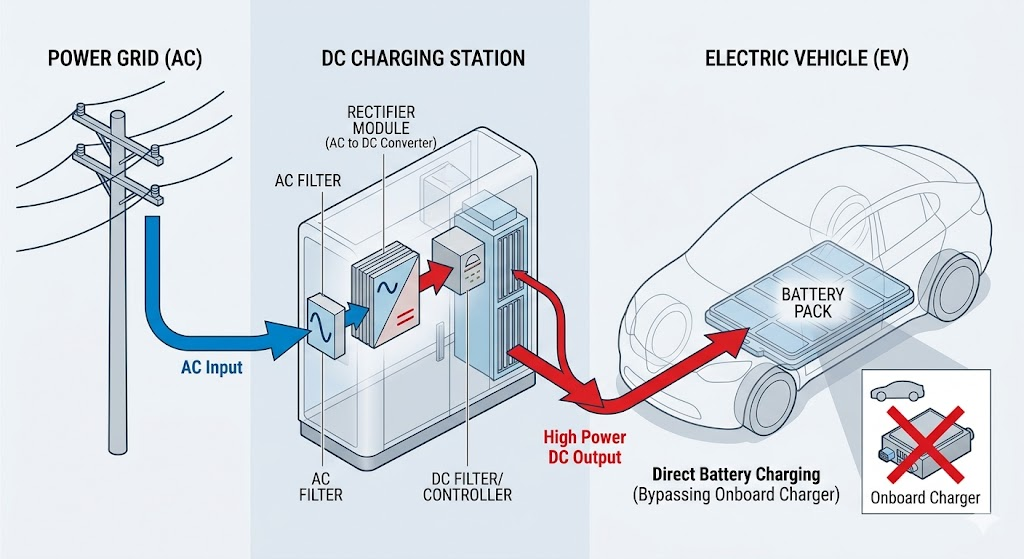
This technological leap allows for wide voltage ranges (up to 1000VDC), ensuring compatibility with the latest high-voltage EV battery platforms. Furthermore, with integrated AI energy management systems, these stations can intelligently balance loads, ensuring the power grid remains stable even when multiple vehicles are charging simultaneously.
Enhancing Operational Efficiency for Fleets
For fleet managers, every minute a vehicle spends at a charging station is a minute it isn’t generating revenue. DC fast charging stations are engineered to solve this. By enabling vehicles to reach an 80% charge in approximately 20 to 30 minutes, these stations allow for “opportunity charging” topping up batteries during shift changes, lunch breaks, or between delivery routes.
- Minimized Downtime: Faster charging cycles mean fewer vehicles are required to cover the same operational demands.
- Scalable Architecture: Many advanced charging solutions offer modular designs, allowing businesses to start with a modest setup and scale their infrastructure as their fleet grows.
- Intelligent Monitoring: Features like cloud connectivity, OCPP compliance, and real-time remote diagnostics allow operators to track performance, manage energy costs, and perform predictive maintenance without manual intervention.
Choosing the Right Infrastructure
Investing in a robust charging solution requires more than just picking a power rating. Site planners should prioritize equipment that offers:
- High Reliability: Look for IP-rated, fully sealed casings that can withstand harsh outdoor conditions, ranging from -40℃ to 60℃.
- Safety Protocols: Essential protections include overvoltage, undervoltage, overload, and short-circuit protection, alongside advanced insulation monitoring.
- User-Friendly Interaction: High-brightness touch screens and intuitive payment/authentication interfaces ensure that drivers of all experience levels can operate the hardware with ease.
For organizations looking to lead the new era of intelligent charging, selecting a partner that offers not only hardware but also technical support and market strategy guidance is vital. By integrating a professional-grade DC battery charger station into your facility, you are not just buying equipment; you are building a resilient ecosystem that ensures your fleet remains operational, sustainable, and ready for the demands of tomorrow.
FAQs
How much time does a DC battery charger station actually save compared to home chargers?
Standard home AC chargers typically provide a slow charge that can take 8 to 12 hours for a full cycle. In contrast, a professional-grade DC battery charger station can charge most modern electric vehicles to 80% in approximately 20 to 30 minutes, drastically reducing vehicle downtime during business hours.
Are DC charging stations safe for all types of electric vehicles?
Yes, most commercial DC charging stations are designed with universal safety standards and multiple power output capabilities. They communicate with the vehicle’s Battery Management System (BMS) to negotiate the safest and most efficient charging current, ensuring that the battery remains protected from overheating or overcharging regardless of the vehicle brand.
What is the benefit of a modular design in charging infrastructure?
A modular design allows fleet operators to scale their energy needs over time. You can start with a basic power configuration and easily add power modules or hardware units as your fleet grows. This flexibility prevents the need for costly total infrastructure replacements when your operational demand increases in the future.
Does weather affect the performance of a DC charger station?
High-quality industrial chargers are built to withstand extreme temperatures and environmental conditions. Units with high IP (Ingress Protection) ratings are fully sealed against dust and moisture, and they feature intelligent cooling systems that maintain optimal operating performance even in harsh, outdoor climate conditions, ensuring reliable service year-round.
Conclusion
Investing in a DC battery charger station is a strategic move for any organization committed to modernizing its logistics and fleet operations. By cutting charging times, increasing operational uptime, and utilizing intelligent energy management, businesses can significantly reduce their overhead while moving toward a greener future. The shift to direct current charging is no longer just an upgrade it is a competitive necessity. As EV technology evolves, choosing robust, scalable, and intelligent infrastructure will ensure your fleet remains agile, efficient, and ready to meet the logistical challenges of tomorrow.
