
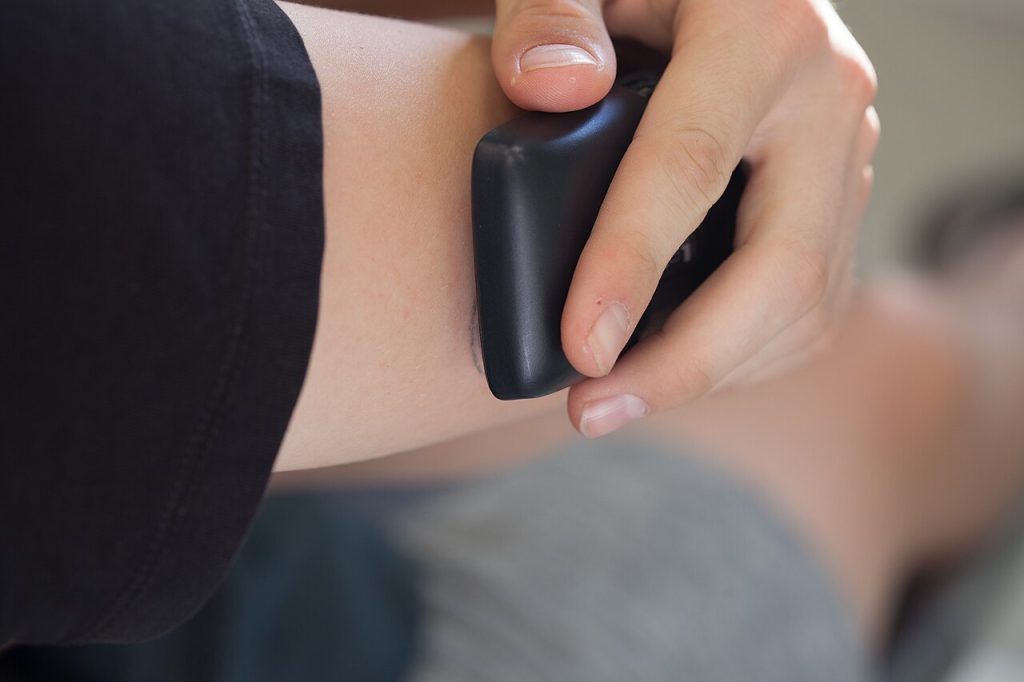
For people living with type 2 diabetes, blood sugar management has traditionally meant a handful of finger-prick readings a day — snapshots of a moving target. Continuous glucose monitors (CGMs) replace those snapshots with a film: a sensor worn on the arm streams readings every few minutes, day and night. The payoff, according to accumulating clinical evidence, is substantial: CGM users with type 2 diabetes spend roughly five more hours each day within the target blood-sugar range than those relying on conventional testing.
Why ‘time in range’ is the metric that matters
Clinicians increasingly judge glucose control by time in range — the share of the day spent between 3.9 and 10 mmol/L — rather than by HbA1c alone. Five extra hours in range is not an abstract statistic. It corresponds to fewer damaging glucose spikes after meals, fewer dangerous overnight lows, and measurably lower average glucose over months. The Diabetes UK charity describes CGM as transformative for many users because the feedback loop is immediate: eat, watch the curve respond, adjust. Behaviour that finger-prick testing teaches over months, a sensor teaches in days.
The devices were originally reserved for type 1 diabetes and insulin-intensive regimens. The new evidence matters because it covers the far larger type 2 population, including people managed on oral medication, where payers have historically questioned whether the cost is justified. Trials and real-world registry data now show improvements in time in range and HbA1c alongside reductions in hypoglycaemia-related emergencies — the expensive, dangerous events health systems most want to avoid.
The access gap
Technology this effective creates an equity problem. Sensors cost hundreds per month without coverage, and eligibility rules vary sharply between health systems and insurers. Guidance from bodies such as the National Institute for Health and Care Excellence has progressively widened recommendations, but provision on the ground lags guidance in many regions. Advocates argue the economics favour wider access: preventing one severe hypoglycaemic episode or slowing one case of kidney or eye damage offsets years of sensor costs. Our coverage follows the policy debate.
What it means day to day
What using one actually feels like
Ask long-term users what changed and few start with numbers. They talk about sleeping through the night without fear of an undetected low, about learning in the first fortnight that their “healthy” breakfast spiked them higher than dessert did, about showing their clinician a month of continuous data instead of a logbook reconstructed from memory in the waiting room. The devices are not frictionless — sensors detach, alarms interrupt meetings, and some people find constant visibility stressful rather than empowering, which is why good programmes pair the hardware with education and permission to take breaks. But the aggregate satisfaction data is lopsided, and it aligns with the clinical data: this is a technology patients ask to keep.
Clinicians add one practical footnote: the first fortnight of wearing a sensor is when the learning happens, and structured support during those two weeks — a review of the wearer’s own patterns with a nurse or educator — is what converts raw data into durable habits. Programmes that simply post the device and hope consistently get less from it than programmes that teach people to read themselves.
For patients, the lived change is as much psychological as clinical. Alarms replace guesswork at night; trend arrows replace anxiety before meals and exercise; appointments become data reviews rather than interrogations. There are burdens too — skin irritation, alarm fatigue, and the emotional weight of a permanent number. But five more hours a day in range, compounded over years, is the kind of incremental gain that prevents complications. The question is no longer whether CGMs work for type 2 diabetes. It is who gets one. Read more health technology reporting at our homepage.
