
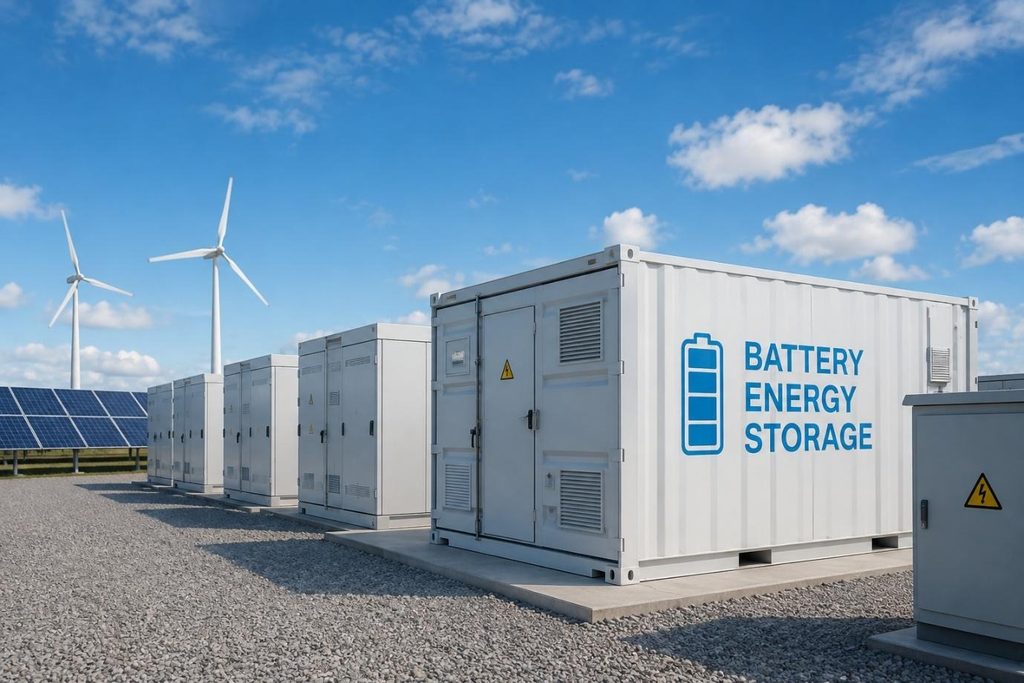
Imagine a world where the sun keeps shining long after it sets, and the wind keeps blowing even on the calmest days. That’s essentially what battery energy storage makes possible. It captures electricity when it’s abundant and cheap, then releases it exactly when it’s needed most. As renewable energy adoption accelerates worldwide, this technology has quietly become one of the most important pieces of our energy infrastructure.
Whether you’re a homeowner considering solar panels, a business trying to cut energy costs, or simply curious about how the grid of tomorrow will function, understanding battery energy storage is worth your time. Let’s break down what it is, how it works, and why it matters.
What Is Battery Energy Storage?
Battery Energy Storage Systems, commonly known as BESS, are technologies that store electrical energy in chemical form and release it as electricity when required. Think of them as giant rechargeable batteries — similar to the one in your phone, but scaled up to power homes, businesses, or entire cities.
These systems sit between energy generation and energy consumption, acting as a buffer. They charge up during periods of low demand or high renewable output, and discharge during peak demand or when generation dips. This simple concept has massive implications for how we produce, distribute, and consume electricity.
How Does Battery Energy Storage Work?
At its core, a battery storage system works through electrochemical reactions. When electricity flows into the battery, it triggers a chemical reaction that stores energy. When that electricity is needed again, the reaction reverses, converting stored chemical energy back into usable electrical power.
A typical BESS installation includes several key components:
- Battery cells or modules — where the actual energy storage happens
- Battery management system (BMS) — monitors temperature, voltage, and health to keep the system safe and efficient
- Power conversion system (PCS) — converts stored DC power into AC power (and vice versa) for use on the grid
- Thermal management system — keeps batteries within a safe operating temperature range
- Energy management software — decides when to charge and discharge based on grid needs, pricing, or demand patterns
Together, these components allow storage systems to respond within milliseconds, making them incredibly valuable for stabilizing power grids.
Types of Battery Energy Storage Technologies
Not all batteries are created equal. Different chemistries suit different applications, budgets, and performance needs.
Lithium-Ion Batteries
The most widely used technology today, lithium-ion batteries dominate both the electric vehicle and grid storage markets. They offer high energy density, long cycle life, and relatively fast charge and discharge rates. Within this category, lithium iron phosphate (LFP) batteries have gained popularity for stationary storage due to their safety profile and longevity, even though they have slightly lower energy density than nickel-based lithium chemistries.
Flow Batteries
Flow batteries store energy in liquid electrolytes housed in external tanks. Because the energy capacity and power output can be scaled independently, they’re well suited for long-duration storage applications, such as storing energy for eight hours or more. Vanadium redox flow batteries are the most common type in commercial use.
Sodium-Ion Batteries
An emerging alternative to lithium-ion, sodium-ion batteries use more abundant and cheaper raw materials. While energy density is currently lower, ongoing research is closing that gap, making this a technology to watch for cost-sensitive, large-scale applications.
Lead-Acid Batteries
The oldest rechargeable battery technology still in commercial use, lead-acid batteries are inexpensive but have shorter lifespans and lower energy density. They remain common in smaller backup power systems and off-grid applications.
Emerging Technologies
Solid-state batteries, thermal storage, and even mechanical alternatives like flywheels and compressed air are being developed to complement or eventually rival lithium-ion in specific use cases.
Why Battery Energy Storage Matters
1. Enabling Renewable Energy Integration
Solar and wind power are intermittent by nature — they generate electricity only when the sun shines or the wind blows. Battery storage smooths out this variability, storing excess renewable generation and releasing it when production drops. This makes renewables more reliable and reduces the need for fossil-fuel backup plants.
2. Grid Stability and Reliability
Power grids must maintain a precise balance between supply and demand at all times. Battery storage systems can respond almost instantly to fluctuations, providing frequency regulation and voltage support that keeps the grid stable — something traditional power plants struggle to do as quickly.
3. Peak Shaving and Cost Savings
Electricity prices often spike during periods of high demand. Businesses and utilities can use stored energy during these peak windows instead of drawing expensive power from the grid, a strategy known as peak shaving. Over time, this can lead to significant cost savings.
4. Backup Power and Resilience
For homes and businesses in areas prone to outages, battery storage offers a dependable backup power source. Unlike diesel generators, batteries provide instant, silent, and emission-free backup power.
5. Reducing Carbon Emissions
By enabling greater use of renewable energy and reducing reliance on fossil-fuel peaker plants, battery storage plays a direct role in lowering greenhouse gas emissions across the energy sector.
Real-World Applications
Battery energy storage isn’t just a future concept — it’s already reshaping energy systems today:
- Utility-scale storage — Large battery installations paired with solar or wind farms store excess generation for use during evening peak hours, when solar output drops but demand remains high.
- Residential storage — Home battery systems paired with rooftop solar allow homeowners to use their own stored solar power at night, reducing dependence on the grid.
- Commercial and industrial storage — Businesses use battery systems to manage demand charges, ensure uninterrupted operations, and support sustainability goals.
- Electric vehicle charging support — Batteries help EV charging stations manage high, fluctuating power demands without overloading local grids.
- Microgrids — Remote communities, military bases, and campuses use battery storage as part of self-sufficient microgrids that can operate independently of the main grid.
Challenges Facing Battery Energy Storage
Despite its promise, the technology isn’t without obstacles.
Cost: While prices have dropped dramatically over the past decade, upfront costs for large-scale storage systems remain a barrier for widespread adoption in some markets.
Raw material supply: Lithium, cobalt, and nickel mining raises environmental and ethical concerns, and supply chains can be vulnerable to geopolitical disruptions.
Degradation and lifespan: Batteries lose capacity over time with repeated charge-discharge cycles, which affects long-term economics and requires careful management.
Recycling and end-of-life management: As the first generation of large-scale batteries approaches retirement, the industry is racing to build effective recycling infrastructure to recover valuable materials and minimize waste.
Duration limitations: Most lithium-ion systems are optimized for short-duration storage (two to four hours), which creates a gap for applications needing longer discharge periods.
The Future of Battery Energy Storage
The trajectory is clear: battery storage capacity is expanding rapidly across the globe, driven by falling costs, supportive policies, and the urgent need to decarbonize power grids. Innovations in battery chemistry, second-life applications for retired EV batteries, and improved recycling processes are all expected to make storage cheaper, safer, and more sustainable in the coming years.
As more countries commit to renewable energy targets, battery storage will move from being a supporting technology to a central pillar of energy infrastructure — as fundamental to the grid as transmission lines and power plants are today.
Final Thoughts
Battery energy storage is quietly transforming how the world generates, distributes, and consumes electricity. It bridges the gap between intermittent renewable generation and constant energy demand, strengthens grid reliability, and opens the door to a cleaner, more resilient energy future. As technology continues to mature and costs keep falling, battery storage will only become more integral to homes, businesses, and power grids everywhere.
Whether you’re evaluating storage for your own property or simply trying to understand the energy transition, one thing is clear: batteries aren’t just powering our devices anymore — they’re powering the future of the grid itself.
Source: https://researchintelo.com/report/battery-energy-storage-market
