
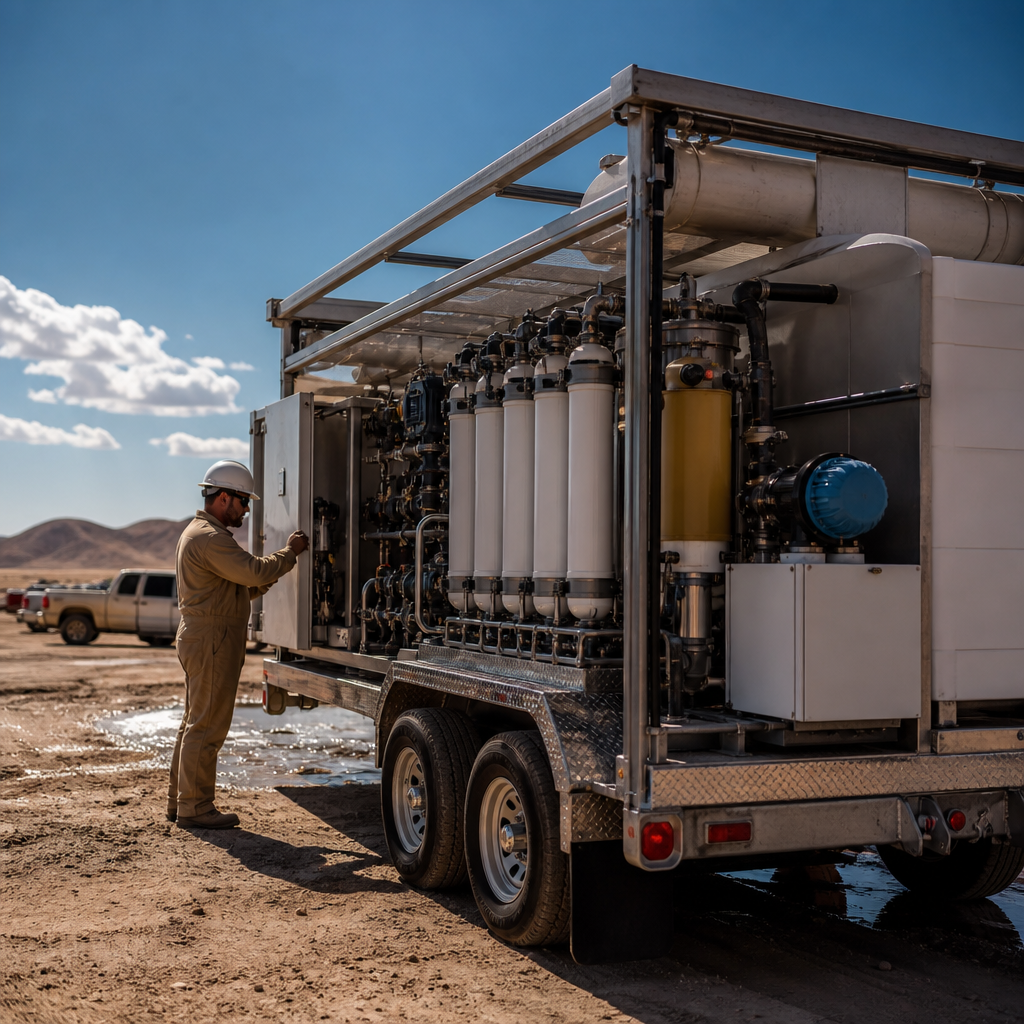
Remote operations — whether oil and gas extraction, mining camps, disaster relief staging areas, or off-grid construction projects — share one fundamental challenge: reliable access to power and clean water. Unlike urban infrastructure projects, these sites cannot simply tap into a municipal grid or a treated water supply. Every kilowatt and every gallon must be engineered, transported, and maintained on-site. The solution increasingly lies in purpose-built mobile systems, and the quality of those systems depends almost entirely on the precision of the fabrication work behind them.
The Engineering Demands of Remote Site Infrastructure
Mobile power generation and water filtration units are not off-the-shelf products. They are complex assemblies of pressure vessels, structural skids, piping networks, electrical enclosures, and filtration housings — all of which must perform reliably under harsh environmental conditions. Extreme temperatures, high humidity, corrosive atmospheres, and constant vibration from transport and operation place extraordinary stress on every weld, every fitting, and every structural joint.
This is why the fabrication process is not merely a manufacturing step — it is the engineering backbone of the entire system. A poorly fabricated skid frame can flex under load, misaligning pumps and generators and causing premature failure. A substandard weld on a pressure vessel can create a catastrophic safety hazard miles from the nearest emergency response team. The stakes at remote sites are simply higher, and the fabrication standards must reflect that reality.
Structural Skid Design and Load Management
The structural skid is the foundation of any mobile power or water treatment unit. It must support the combined weight of generators, fuel tanks, filtration membranes, control panels, and ancillary equipment while surviving road transport, helicopter lifts, or barge loading. Fabricators working in this space design skids with finite element analysis in mind, selecting steel grades and weld configurations that distribute dynamic loads evenly and resist fatigue cracking over years of service. Fork pockets, lifting lugs, and tie-down points are not afterthoughts — they are engineered features that determine whether a unit arrives at a remote site intact or damaged beyond use.
Mobile Power Generation: From Diesel Gensets to Gas-Fueled Systems
For decades, diesel generators were the default power source for remote sites. They remain common, but the economics and environmental pressures of the past decade have accelerated the adoption of natural gas and LNG-fueled generation systems. These systems offer lower fuel costs, reduced emissions, and in many cases, access to stranded gas resources that would otherwise be flared. The transition, however, requires sophisticated fabrication work to integrate gas conditioning, pressure regulation, and safety shutdown systems into compact, transportable packages.
Understanding the phased development of gas processing infrastructure is critical for operators planning remote power strategies. A practical guide to phased LNG and gas processing development outlines how operators can scale gas utilization incrementally, matching capital investment to production growth while maintaining operational flexibility. This phased approach directly influences how mobile power units are specified and fabricated — modular designs that can accept additional generator sets or expanded fuel conditioning capacity without requiring complete system replacement.
Fuel System Integration and Safety Engineering
Integrating gas fuel systems into mobile power units demands precision fabrication of high-pressure piping, pressure relief assemblies, and gas detection enclosures. Every connection point is a potential leak source, and in a remote environment, a gas leak can escalate rapidly without the benefit of nearby emergency services. Fabricators must adhere to ASME, API, and relevant local pressure vessel codes, with full documentation of material certifications, weld procedure specifications, and non-destructive examination results accompanying every unit that leaves the fabrication facility.
Water Filtration Systems Built for the Field
Access to potable water is as critical as power at any remote site. Mobile water filtration systems range from simple sediment and UV treatment units for small camps to sophisticated reverse osmosis and multi-stage filtration assemblies capable of treating brackish groundwater or even produced water from oil and gas operations. Each system must be housed in a weatherproof, structurally sound enclosure that protects sensitive membranes and instrumentation from temperature extremes and physical damage during transport.
Fabrication quality directly determines the service life and maintenance burden of these systems. Stainless steel piping with properly passivated welds prevents corrosion that would otherwise contaminate treated water. Properly sealed electrical enclosures protect control systems from moisture ingress. Thoughtfully designed access panels and maintenance hatches allow field technicians to service membranes and filters without specialized tools or equipment — a critical consideration when the nearest supply depot may be hours away.
Modular Design for Scalable Deployment
The most effective remote site water systems are designed with modularity in mind. A base unit might handle initial camp water needs, with additional filtration stages or storage capacity added as the site population grows. This requires fabricators to design connection interfaces, structural attachment points, and utility routing with future expansion explicitly accounted for. It is a discipline that separates experienced industrial fabricators from general metalworking shops.
Craftsmen Industries: Precision Fabrication for Demanding Applications
When remote site operators need mobile power and water systems they can trust, the quality of the fabrication partner is not a secondary consideration — it is the primary one. Craftsmen Industries brings decades of experience delivering complex, custom-fabricated systems for industrial clients operating in demanding environments. Their industrial fabrication services encompass structural steel fabrication, pressure vessel manufacturing, custom enclosure design, and complete system integration — all executed to the exacting standards that remote site applications demand. From initial engineering consultation through final quality inspection, their team ensures that every unit leaving their facility is built to perform where failure is not an option.
The Role of Skilled Welders in Critical Fabrication Work
Behind every reliable mobile power or water filtration unit is a skilled welder-fabricator whose craftsmanship determines the integrity of the finished system. The welding profession encompasses a wide range of specializations, from structural steel to precision pipe welding, and the best fabrication facilities invest heavily in certified, experienced welding professionals. For those interested in understanding the career pathways and certifications that define excellence in this field, the American Welding Society’s guide to welder-fabricator career paths provides a comprehensive overview of the skills and credentials that distinguish top-tier fabrication talent.
Conclusion: Fabrication Quality as a Competitive Advantage
Remote site operators face enough challenges without worrying about whether their power generation and water filtration systems will hold up under field conditions. The answer to that concern is not found in the specifications sheet alone — it is found in the quality of the fabrication work that transforms those specifications into physical systems. Precision welding, engineered structural design, code-compliant pressure systems, and modular scalability are not premium features reserved for the largest projects. They are baseline requirements for any mobile system expected to perform reliably in an environment where the consequences of failure are measured not just in downtime, but in safety and operational continuity. Choosing the right fabrication partner from the outset is the most important decision a remote site operator can make.
