
Access to electricity is critical for modern operations, but traditional power grids do not reach every location. Remote construction projects, agricultural lands, mining sites, and disaster relief zones often rely on fossil fuel generators. These traditional generators create high operational costs, require constant refueling, and produce harmful exhaust.
Portable clean energy technology addresses these issues directly. A modern mobile solar storage container combines solar panels, battery storage, and energy management hardware into a single transportable structure. This system provides reliable power wherever a standard shipping container can travel.
Core Components of Modular Power Units
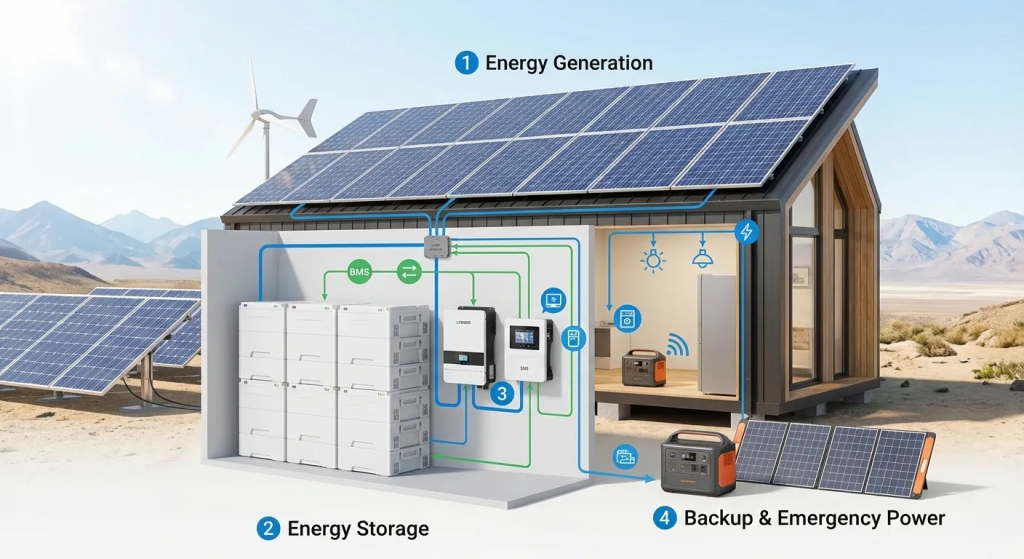
A fully integrated solar storage unit functions as an independent microgrid. Instead of setting up solar arrays piece by piece on-site, technicians receive a factory-tested unit ready for quick setup.
Each unit contains three essential hardware layers:
- Generation Layer: Pre-wired solar panel racks unfold from the top or sides of the steel frame, expanding the surface area to capture sunlight efficiently.
- Storage Layer: High-capacity lithium iron phosphate (LiFePO4) battery packs store excess energy generated during daylight hours for continuous night use.
- Control Layer: Heavy-duty inverters, charge controllers, and thermal management systems adjust voltage and protect internal electronics from heat and moisture.
Because all parts fit inside standard ISO shipping containers (typically 20-foot or 40-foot lengths), transport trucks, cargo ships, or freight helicopters can move them easily.
Key Benefits of Using Containerized Solar Systems
Transitioning from diesel generators to solar storage equipment yields clear operational advantages:
- Lower Operating Costs: Sunlight is free. Cutting diesel fuel consumption eliminates high delivery fees to remote sites and protects project budgets from fuel price spikes.
- Rapid Deployment: Setting up traditional solar arrays takes weeks of site prep and rack mounting. Portable units unfold and begin generating electricity within hours of arrival.
- Quiet Operation: Diesel engines generate noise levels above 85 decibels, which creates health hazards for workers and disturbs nearby communities. Solar battery systems operate silently.
- Low Maintenance Requirements: Generators contain moving parts that wear down, requiring frequent oil changes, filter replacements, and mechanical repairs. Solid-state solar and battery components require minimal upkeep.
- Scalable Output: Operations can link multiple container units together in parallel to match rising electricity demands on larger project sites.
Common Applications Across Key Industries
Industrial operators deploy these units in places where grid infrastructure is weak or missing entirely.
Remote Construction and Infrastructure
Building roads, bridges, and tunnels requires electricity for power tools, lighting rigs, office trailers, and heavy machinery charging. A temporary solar container delivers clean electricity directly to the site without requiring utility company line extensions. When the project wraps up, workers pack up the unit and move it to the next job site.
Emergency Response and Disaster Relief
Extreme weather events and natural disasters often disable municipal power grids. Emergency teams need immediate power to operate field hospitals, water purification units, and communication centers. Container units supply reliable electricity quickly, helping relief teams maintain vital services when local grids fail.
Agricultural and Irrigation Projects
Farmland often spans hundreds of acres far from primary power lines. Running power lines across long distances costs thousands of dollars per mile. Farmers use containerized power equipment to run irrigation pumps, electric fences, and remote monitoring systems efficiently without long utility wires.
Mining and Extraction Operations
Mining camps need substantial energy for worker housing, ventilation equipment, and site lighting. Combining solar arrays with battery storage cuts generator run-times during daytime hours, significantly lowering fuel transport logistics over rough terrain.
Technical Challenges and Operational Considerations
While containerized power offers clear gains, site managers must evaluate specific operational factors during project planning:
- Initial Capital Investment: Quality solar panels, high-grade inverters, and lithium battery storage systems require a higher initial purchase price than basic diesel generators. Long-term fuel savings offset this cost over time.
- Weather Dependability: Solar output decreases on overcast days or during prolonged storms. Most heavy-duty units incorporate backup fuel inputs, allowing existing generators to run briefly only when battery levels drop too low.
- Weight and Transportation: Packed steel containers with dense battery banks require proper crane equipment or heavy forklifts for unloading. Sites must have flat ground and clear clearance for delivery trucks.
- Temperature Management: Extreme ambient temperatures affect battery efficiency. Advanced units feature built-in HVAC equipment to keep battery compartments within safe operating ranges.
Current Industry Trends and Future Developments
The technology powering mobile microgrids continues to advance alongside general energy storage developments:
- Higher Energy Density Batteries: Newer battery chemistries pack more storage capacity into smaller, lighter enclosures without increasing container dimensions.
- Smart Monitoring Software: Integrated IoT software tracks energy creation and storage levels in real time. Remote operators monitor performance and run diagnostic checks from smartphones or central offices.
- Automated Deployment: Engineers are building motorized tracking frames that fold out at the touch of a button and track the sun’s path across the sky automatically for maximum solar intake.
Final Thoughts
Replacing or supplementing legacy fuel generators with containerized clean energy provides a reliable answer for off-grid power challenges. These units provide dependable electricity, cut fuel logistics, and simplify setup across remote work sites.
As battery performance improves and equipment costs decrease, modular power containers will play an increasingly prominent role in industrial operations, remote farming, and disaster response strategy.
