
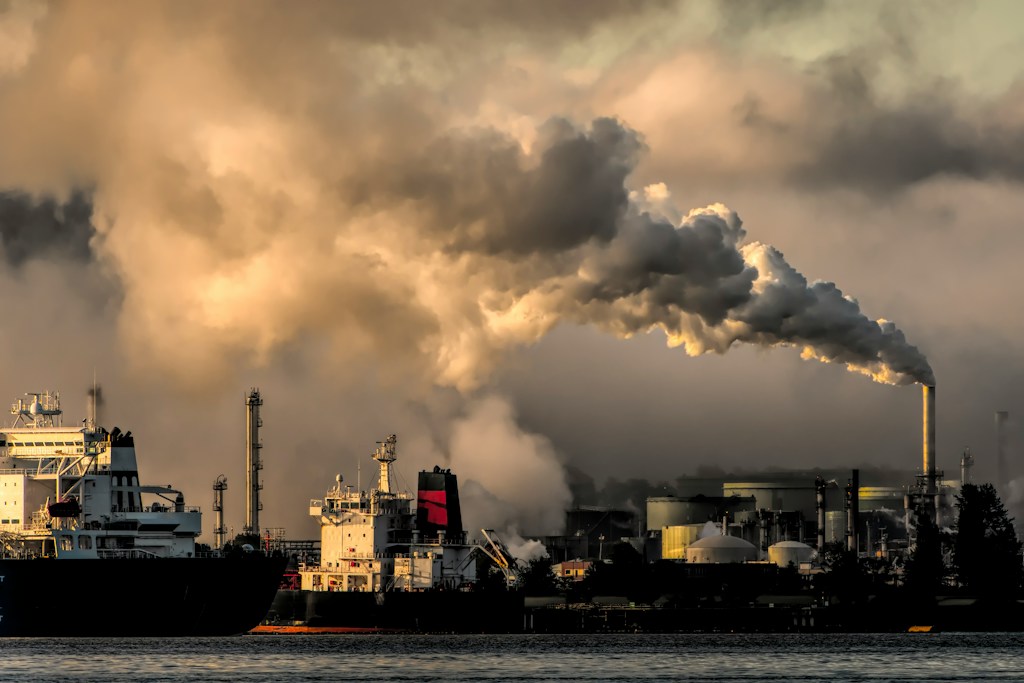
Heavy industries face growing pressure to reduce greenhouse gas emissions while maintaining production output.
Executing an effective decarbonization process requires updating energy-intensive operations such as chemical manufacturing, steelmaking, refining, and power generation using clean energy, alternative feedstocks, and advanced process controls.
Four main pillars of the decarbonization process
Industrial facilities rely on four main strategies to reduce carbon footprints systematically:
- Energy efficiency and waste reduction: Optimizing steam systems, heat recovery loops, and utility networks cuts energy waste without requiring major infrastructure overhauls.
- Fuel switching and electrification: Replacing fossil fuels with renewable power, green hydrogen, or biomass lowers direct Scope 1 emissions. Industrial heat pumps and electric boilers can replace gas burners in low- to medium-temperature processes.
- Integration of green molecules: Hard-to-abate sectors use green hydrogen and green ammonia as zero-carbon chemical feedstocks and high-density energy carriers where direct electrification is not possible.
- Carbon capture, utilization, and storage (CCUS): CCUS equipment captures CO2 directly from industrial flue gases, preventing emissions from reaching the atmosphere and routing CO2 to permanent storage or industrial use.
Technical challenges in low-carbon operations
Adopting low-carbon technologies creates new process management challenges:
- Burner control during hydrogen blending: Mixing hydrogen into natural gas changes fuel density and combustion behavior, requiring exact composition monitoring to keep burners stable.
- Corrosive media in carbon capture: Amine-based CO2 capture systems operate under varying temperatures, pressures, and corrosive conditions, making precise flow, level, and pH measurements essential for solvent efficiency.
- Steam and utility accounting: Tracking energy use across large plants requires accurate mass balance data to spot steam leaks and heat loss.
- Regulatory compliance and reporting: Meeting carbon reporting standards requires certified, audit-ready measurement data.
How Endress+Hauser supports low-carbon transitions
Endress+Hauser provides high-accuracy measurement solutions designed to support industrial decarbonization projects:
- Coriolis mass flowmeters (Promass Q / Promass F): Deliver accurate mass flow, density, and temperature data for hydrogen blends, green gases, and liquid fuels to ensure reliable carbon accounting.
- Vortex and ultrasonic flowmeters (Prowirl F 200 / Proline Prosonic Flow G 300/500): Track high-temperature steam distribution, condensate return, and process gas flows to minimize thermal energy losses across utility networks.
- Laser-based gas analyzers ( Raman Spectroscopy): Provide real-time composition analysis during fuel blending and CO2 capture to maintain product quality and protect process equipment.
- Heavy-duty pressure and temperature transmitters (Cerabar / iTHERM): Feature hydrogen-resistant diaphragms and durable thermowells built for high thermal stress and harsh environments.
- Digital energy management solutions (Netilion): Connect field instruments to cloud dashboards to track energy KPIs, automate reporting, and simplify compliance audits.
Warning signs of inadequate process control
Facilities attempting to decarbonize without integrated, high-precision instrumentation frequently encounter severe operational disruptions. Relying on estimated fuel consumption or uncalibrated flowmeters generates inaccurate carbon data, resulting in compliance failures during regulatory audits. In fuel-blending systems, undetected fluctuations in gas composition trigger burner instability, elevated NOx emissions, and unexpected plant trips. Additionally, inadequate level and temperature monitoring within carbon capture units leads to excessive energy consumption and rapid solvent degradation. Upgrading to advanced process automation and digital measurement systems resolves these core operational risks, transforming ambitious sustainability commitments into efficient and verifiable industrial realities.
