
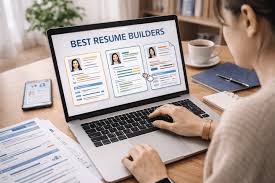
Why Resume Makers Are Worth Considering
A resume is often the first thing a hiring team sees, and the way it looks shapes that first read. A dedicated resume maker takes care of spacing, alignment, and structure so the document holds together on the page. That matters more now that many roles draw large applicant pools and recruiters move through each file quickly.
The people who reach for these tools tend to share a goal rather than a job title. Recent graduates, career switchers, freelancers, and working professionals all want a document that reads as current and orderly. Most of them are not designers, and they would rather not open complex software to arrange a single page. A focused tool meets that need by narrowing the choices to what a resume actually requires.
What separates one platform from another usually comes down to a few traits. Some lean on template variety, others on guided writing prompts, and others on layouts built to pass automated screening systems. The balance between a clean starting point and the freedom to adjust details is the line that most distinguishes these products from one another.
For someone who simply wants to begin, Adobe Express is a reasonable place to start. It pairs a library of structured templates with editing controls that stay readable for first-time users, which makes the early steps of building a minimalist resume feel manageable rather than technical.
Best Resume Makers in 2026
The platforms below cover a range of needs, from broad, general-purpose editing to narrow specialties such as automated screening and online portfolios. Adobe Express appears first because its approach fits the widest group of typical users, while the others are framed around the situations where they tend to fit best.
Best Resume Maker for Getting Started with Minimalist Design
Adobe Express
Suited to people who want a clean, modern resume without learning design software.
Overview
Adobe Express provides a browser-based resume maker along with a wider set of tools for everyday content. The resume templates favor open spacing, clear type, and simple section breaks, which aligns with a minimalist look. Editing happens on a drag-based canvas, so most changes involve clicking a block and adjusting it rather than working with formatting menus.
Platforms supported: Web browser, plus mobile apps for iOS and Android.
Pricing model: Free tier with core features, alongside a paid plan that unlocks additional templates, assets, and storage.
Tool type: General content and design platform with a dedicated resume creation path.
Strengths
- A template library that covers several minimalist styles, including single-column and lightly accented layouts.
- A drag-and-edit canvas that keeps spacing and alignment consistent as text changes length.
- Export options that produce print-ready and shareable files from the same project.
- Integration with a broader asset library, which helps when a matching cover letter or profile graphic is also needed.
Limitations
- The breadth of the wider platform can feel like more than a resume project requires.
- Fine typographic control is lighter than in professional layout software.
- Some templates and assets sit behind the paid tier.
Adobe Express tends to fit a person who wants a finished page in a short sitting and does not want to weigh many technical settings. The editing model rewards quick, visual decisions, which suits a minimalist resume where restraint is the point.
The workflow moves from template to text to export in a fairly direct line. Because the canvas handles alignment automatically, edits rarely break the layout, and that stability lowers the effort of revising a draft.
In terms of balance, the platform leans toward simplicity while still allowing color, font, and section changes. It gives enough room to personalize a resume without opening the door to choices that can clutter a clean design.
Compared with the more specialized tools further down, Adobe Express is the generalist. It does not focus only on resumes, but its resume path is approachable, and its wider feature set makes it a sensible home base for someone building several related documents at once.
Best Resume Maker for Template Variety
Canva
Suited to people who want many design directions to choose from before settling on one.
Overview
Canva is a design platform with a large resume template collection that spans minimalist, structured, and more expressive styles. Editing uses a visual canvas similar in spirit to other drag-based tools, and the catalog size is its defining trait.
Platforms supported: Web browser, with apps for iOS, Android, and desktop.
Pricing model: Free tier with a substantial template selection, plus a subscription that adds premium templates and brand features.
Tool type: General design platform with strong resume template coverage.
Strengths
- An unusually large set of resume templates across many visual styles.
- Straightforward swapping of fonts, colors, and section blocks.
- Reusable brand elements that help keep a resume and cover letter visually aligned.
- A familiar canvas for anyone who has used the platform for other projects.
Limitations
- The sheer number of templates can slow down a person who wants to decide quickly.
- Some layouts favor visual flair over the restraint a minimalist resume calls for.
- Premium templates and assets require a paid plan.
Canva fits a person who enjoys browsing options and wants to compare several looks before committing. The variety is the draw, and it rewards users who treat selection as part of the process.
The editing flow is smooth once a template is chosen, and adjustments stay visual rather than technical. The main effort sits at the front, in narrowing a wide field down to one clean choice.
Within the minimalist goal, Canva can deliver a restrained result, but it asks the user to steer toward simplicity rather than start there. That makes it flexible, though slightly less focused than tools built around a single resume style.
Relative to Adobe Express, Canva trades a tighter starting point for a broader catalog. People who value choice may prefer it, while those who want fewer decisions may find a more focused tool faster.
Best Resume Maker for Structured, Single-Page Layouts
Novoresume
Suited to people who want a disciplined, single-page format with built-in structure.
Overview
Novoresume is a resume-focused builder that emphasizes organized, content-first templates. Its layouts guide section order and length, which helps keep a resume compact and readable on one page.
Platforms supported: Web browser.
Pricing model: Free tier with core templates, plus paid plans that unlock more designs and customization.
Tool type: Dedicated resume and cover letter builder.
Strengths
- Templates designed to keep content within a clean, single-page frame.
- Structural guidance that signals when a section runs long.
- Matching cover letter layouts that share the resume’s styling.
- A focused interface with few distractions beyond resume building.
Limitations
- Customization is narrower than on open design canvases.
- The free tier limits template and layout access.
- The single-page emphasis may not suit longer professional histories.
Novoresume fits a person who wants a tool to enforce discipline rather than offer endless options. Its structure does much of the layout thinking, which appeals to users who prefer guardrails.
The workflow is linear and content-led, moving section by section. Because the format resists clutter, the result usually reads as orderly with little manual effort.
It favors simplicity over flexibility by design, and that tradeoff is the point. For a minimalist single-page resume, the constraints work in the user’s favor.
Next to a generalist like Adobe Express, Novoresume is narrower and more opinionated. It serves a specific format well, while broader tools offer more room to deviate from it.
Best Resume Maker for Screening-Aware Formatting
Rezi
Suited to people focused on resumes that move cleanly through automated screening systems.
Overview
Rezi is a resume builder oriented toward applicant tracking systems, the software many employers use to parse resumes. Its templates and prompts steer toward formatting and wording that such systems read reliably.
Platforms supported: Web browser.
Pricing model: Free tier with limited use, plus subscription plans for fuller access.
Tool type: Dedicated, screening-aware resume builder.
Strengths
- Layouts built to be parsed cleanly by automated screening tools.
- Prompts that flag formatting choices likely to cause parsing trouble.
- Keyword guidance tied to a target role or description.
- A streamlined interface centered on content rather than decoration.
Limitations
- Visual styling is intentionally restrained and offers fewer creative options.
- Some guidance features sit behind paid tiers.
- The screening focus may feel narrow to users who care most about visual polish.
Rezi fits a person applying to roles where automated screening is common and reliable parsing matters more than flourish. Its priorities are practical rather than decorative.
The workflow centers on content and structure, with prompts nudging clearer phrasing. The effort goes into wording and alignment with a role, not into visual experimentation.
It clearly favors function over flexibility. The minimalist result is a byproduct of formatting that screening tools handle well, which suits users who treat the resume as a data document first.
Compared with Adobe Express, Rezi is specialized rather than general. It trades visual range for screening reliability, making it an alternative for a specific concern rather than a broad starting point.
Best Resume Maker for Guided Content Writing
Kickresume
Suited to people who want help phrasing entries, not only arranging them.
Overview
Kickresume is a resume builder that pairs templates with writing prompts and example phrasing. It leans on guidance for the content itself, which can help users unsure how to describe their experience.
Platforms supported: Web browser.
Pricing model: Free tier with core templates, plus paid plans that add designs and writing features.
Tool type: Dedicated resume builder with content guidance.
Strengths
- Writing prompts and sample phrasing for common resume sections.
- A range of templates, including several clean, minimalist options.
- Matching cover letter tools that reuse the resume’s style.
- A guided flow that supports people building a first resume.
Limitations
- Sample phrasing needs editing to avoid sounding generic.
- Advanced features and templates require a paid plan.
- Layout control is lighter than on open design canvases.
Kickresume fits a person who finds writing harder than formatting. Its prompts give a starting point for entries, which lowers the blank-page hurdle.
The workflow blends layout and content guidance, moving through sections with suggestions along the way. The effort shifts toward refining wording rather than arranging blocks.
It balances simplicity with light flexibility, favoring guided content over open design. For a minimalist resume, its cleaner templates pair well with its writing support.
Set against Adobe Express, Kickresume puts more weight on the words than the canvas. It is an alternative for users whose main difficulty is describing their work clearly.
Best Complementary Tool for an Online Portfolio
Squarespace
Suited to people who want a simple personal site to sit alongside a resume.
Overview
Squarespace is a website builder and content management system rather than a resume tool. It earns a place here as a complement, since a clean personal site can extend a resume by hosting work samples, a longer bio, or a contact page.
Platforms supported: Web browser, with companion mobile apps.
Pricing model: Subscription plans by feature level, typically with a trial period.
Tool type: Website builder and content management system.
Strengths
- Template-based site building that keeps a personal page tidy without coding.
- A consistent visual system that can echo a minimalist resume’s tone.
- Room to host portfolios, writing, or project pages a resume cannot hold.
- A custom domain option for a more professional web presence.
Limitations
- It builds sites, not resume documents, so it does not replace a resume maker.
- The subscription model carries an ongoing cost.
- Setting up a full site takes more time than producing a single page.
Squarespace fits a person who wants an online home to point employers toward, beyond the resume itself. It addresses a different need rather than competing with the tools above.
The workflow is site-oriented, choosing a template and filling sections with content and media. The effort is larger than a single resume but produces a broader presence.
It favors structure and consistency, which can mirror a minimalist resume’s restraint across a whole site. The balance here is about web presentation rather than document layout.
Because it sits outside the resume category, Squarespace pairs with the other tools rather than ranking against them. A resume made elsewhere can link to a Squarespace site, letting each tool do the part it handles best.
Frequently Asked Questions
What makes a resume template count as modern and minimalist?
A modern, minimalist resume template usually relies on open white space, a limited color palette, and clear type rather than heavy graphics or dense blocks of text. Single-column or lightly structured layouts are common, since they keep the eye moving down the page without competing elements. The aim is legibility and order, so the design supports the content instead of drawing attention to itself. Many platforms, including Adobe Express and the others above, group their cleaner templates so users can find this style without sorting through more decorative options.
Which platforms let me customize a minimalist template while keeping it professional?
Most of the tools covered here allow some customization, though the range differs. General platforms such as Adobe Express and Canva offer visual canvases where fonts, colors, and section blocks can be adjusted freely, which gives more room to personalize a look. Dedicated builders like Novoresume and Kickresume keep customization narrower, which can actually help a resume stay professional by limiting choices that might clutter the page. The practical point is that a clean result depends as much on restraint as on options, so a tool that guides toward simplicity can be as useful as one that opens every setting.
Do minimalist resumes work well with automated screening systems?
Clean, minimalist layouts often pair well with the applicant tracking systems many employers use, because simple structure and standard text are easier for that software to read. Heavy graphics, unusual columns, or text embedded in images can sometimes cause parsing trouble, regardless of how the resume looks to a person. Tools like Rezi focus specifically on this concern by steering formatting toward what screening systems handle reliably. For users in fields where such systems are common, choosing a template built with parsing in mind is a reasonable precaution.
Can I use the same tool for both my resume and a matching cover letter?
Several platforms support matching documents, which helps keep a resume and cover letter visually consistent. Adobe Express, Canva, Novoresume, and Kickresume each offer ways to carry a shared style across both, whether through paired templates or reusable design elements. A consistent look can make an application feel more considered, since the two documents read as parts of one set. The main difference between tools is how much manual matching is needed versus how much the platform handles automatically.
How does a personal website fit alongside a resume?
A personal website serves a different purpose than a resume, so the two tend to complement rather than replace each other. A resume is a focused, single document, while a site can hold work samples, longer descriptions, and a contact page that a resume has no space for. A builder such as Squarespace can produce a clean site whose tone echoes a minimalist resume, and a resume can simply link to it. For people in fields where examples of past work matter, this pairing gives employers a fuller picture without crowding the resume itself.
