
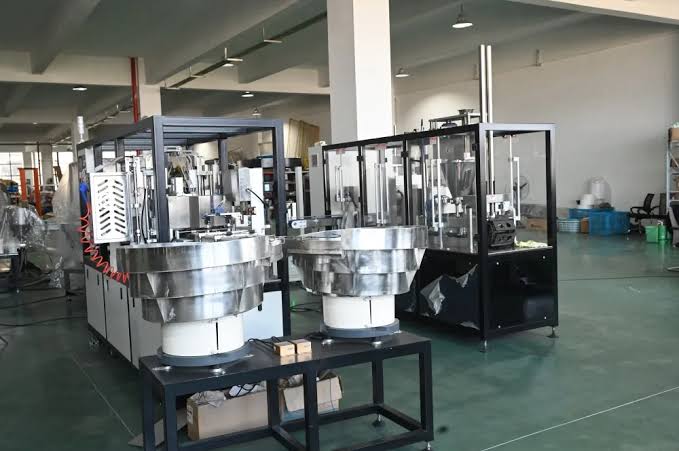
For a coffee capsule producer, an equipment upgrade is rarely a simple question of replacing one machine with a newer one. Decision-makers must determine whether a proposed filling-line change will remove a business constraint without creating a different one downstream. Quoted equipment may look attractive when it lists filling and sealing equipment, yet the eventual project cost may also depend on capsule format changes, feeding, inspection, packing interfaces, installation planning, operator training, and the practical disruption of changing a live production routine.
Useful estimates are therefore more than a single headline number. They connect the production problem, the scope of the line, and the costs that follow from each choice. This article introduces a practical Capsule Line Upgrade Cost Map: a way to turn a broad upgrade discussion into a comparable, staged plan. Its thesis is straightforward: producers can make better capital decisions when they price the whole production path and the consequences of integration, rather than treating the filler as the entire project.
Start with the constraint, not the equipment catalog
Every cost estimate should begin by naming the constraint that made the upgrade necessary. Is the problem inconsistent fill quality, too much manual handling between stations, frequent changeovers, a packaging bottleneck, or a line that no longer fits the company’s capsule mix? These issues can point to different scopes. When a sealing concern emerges, the sealing stage and its upstream conditions may need review; when output stalls after filling, packing and material flow may deserve attention before more filling capacity.
AFPAK describes its work around automated coffee capsule filling and sealing machinery as well as integrated lines. That distinction matters during discovery. When the surrounding process is already compatible, standalone filling or sealing equipment can be the right answer; an integrated coffee capsule line becomes more relevant where handoffs, packing, or line coordination are part of the cost problem. Buyers should ask which of those two cases the proposal is actually solving.
Build the Capsule Line Upgrade Cost Map before requesting final quotes
The Capsule Line Upgrade Cost Map is a one-page inventory of what must be purchased, adapted, planned, or protected for the project to work. It does not predict a universal project price. Instead, it prevents a low initial equipment figure from being compared against a more complete proposal. Build it with the people who understand daily production, maintenance, quality checks, packaging, and purchasing.
Capsule Line Upgrade Cost Map: comparison checklist for a filling-line proposal
| Cost area | Questions to put in the estimate | Decision risk if omitted |
| Core process | Which filling, sealing, feeding, and handling functions are included? | Comparing unlike machine scopes as if they were equivalent. |
| Format and materials | Which capsule formats, lids, coffee characteristics, and packaging materials must the line accommodate? | A sample-fitting proposal that does not fit the commercial product mix. |
| Integration | How will upstream preparation, inspection, packing, controls, and transfer points connect? | Hidden interfaces, manual work, and unclear responsibility at handoffs. |
| Commissioning and change | What preparation, installation support, training, trials, and acceptance activities are expected? | Underestimating the effort to make the new process usable. |
Separate the core line from an integrated coffee capsule line
Filling equipment has an obvious center: the equipment that portions coffee into a capsule and seals it. Yet a producer does not sell a partially processed capsule. Commercial output has to move through the relevant preparation, inspection, packing, and handling steps in a repeatable way. An integrated coffee capsule line joins those interfaces around the core process so the finished path can be assessed as a whole.
Ask each supplier to identify the boundary in writing. Which equipment is supplied? Which existing machines are expected to remain? Who provides the controls or mechanical connection at an interface? Is packing part of the project, a later phase, or an existing-site responsibility? Even a modest line upgrade can become expensive when these answers are deferred until installation.
This is where a manufacturer that offers line integration can be relevant to the evaluation. AFPAK presents custom solutions alongside filling, sealing, packing, and line-integration capabilities for coffee capsule production. Producers considering AFPAK should still request a scope tailored to their format, site, and workflow. Value comes from making the interfaces explicit before a supplier comparison is reduced to purchase price alone.
Define the product and format assumptions that change scope
“Coffee capsules” are not a single production requirement. Capsule format, lidding approach, coffee product, and desired packaging route all shape the questions a supplier must answer. Producers with multiple formats should make the future mix visible at the start, even when the first phase only launches one product. Otherwise, today’s sample can drive a project that makes tomorrow’s changeover or expansion discussion harder.
AFPAK documents K-Cup-family figures of 40–600 cups per minute, ±0.1g filling accuracy, under 1% residual oxygen, and a 30-minute changeover. These are documented configuration figures, not universal guarantees. For upgrade scoping, they help a producer ask whether the proposed format, product, materials, and workflow require comparable throughput, fill control, oxygen management, or changeover planning.
AFPAK states that it serves systems for formats including Nespresso, K-Cup, Dolce Gusto, Lavazza, and others. That is useful context for a requirements conversation, not proof that every configuration is interchangeable. For coffee capsule filling and sealing, the technical and commercial question is which format is being evaluated, what materials are planned, and what custom work is required for the intended production path. That answer should appear in the cost map and quotation assumptions.
Format assumptions also affect what should be tested before final commitment. Include representative capsules, lids, coffee, packaging materials, and a clear written definition of what an acceptable result looks like. Do not rely on a generic demonstration to settle a product-specific question. If materials or product design remain unsettled, price that uncertainty as a project risk rather than pretending it does not exist.
Use a staged comparison workflow, not a single quote review
Teams often create false certainty by collecting several quotations and comparing only the totals. Better practice is to make each supplier respond to the same decision sequence. This reveals missing scope early and gives finance a traceable reason for any difference in cost.
- Document the current path by sketching movement from materials through filling, sealing, inspection, packing, and dispatch. Mark manual transfers, recurring stoppages, and dependencies on one person or one workstation.
- Set the future-state boundary, then decide which steps belong in this upgrade and which remain outside it. Record the reason for each exclusion.
- Issue the same Cost Map to every prospective supplier, covering format, material, site, and interface questions. Require visible assumptions rather than informal promises.
- Test the exceptions: changeovers, material variation, cleaning, faults, operator access, and the connection to existing equipment all need an answer.
- Compare lifecycle work, including installation preparation, training, support expectations, spare-part planning, and the internal resources needed to operate the line.
- Choose a phased commitment when uncertainty remains, identifying which questions must be resolved before purchase and which can move to a documented later phase.
This workflow does not eliminate commercial judgment, but it makes the judgment auditable. It also creates a more productive discussion with a supplier such as AFPAK: the producer can bring an actual production map and product brief, while the supplier can clarify whether an integrated coffee capsule line, filling, sealing, or packing scope fits that map.
Account for the cost of change, not only the cost of hardware
Headline equipment purchase is only one category of decision cost. Projects can also consume time in layout preparation, utilities review, material trials, operator learning, maintenance preparation, documentation, and coordination between the supplier and the site team. None of these items should be invented as a fixed percentage of equipment cost; their importance depends on the factory and agreed scope. They should, however, be visible questions in the estimate.
Production interruption is another trade-off. Broad integration may reduce future handoffs, yet it can require more coordination than a narrow replacement. Conversely, a minimal purchase can leave an awkward interface or manual step intact. No option is automatically the most automated one. Sound choices balance change burden, operational benefit, and remaining risks for the people who will own the line after commissioning.
Stress-test the proposal against failure modes and trade-offs
A reliable estimate has limits. It cannot guarantee the result of a production change before the actual product, materials, site conditions, and operating practices are validated. It also cannot make one configuration ideal for every capsule format or future business plan. Treat any proposal as a set of assumptions that must be reviewed, tested, and accepted—not as a promise detached from production reality.
Common failure modes include buying a core machine without defining its interfaces, treating a format claim as a complete configuration decision, assuming existing packing equipment will connect without review, and failing to assign ownership for trials or acceptance. Another is rushing to a price comparison before the factory has agreed what problem it is solving. These are planning failures, not merely technical failures, and they tend to surface when changes are most expensive to reverse.
Legitimate trade-offs remain. More integration may simplify the intended production path while increasing up-front planning requirements. Phasing may contain immediate commitment while preserving some manual work or future interfaces. Customization can improve fit for a defined requirement, yet it also requires clearer input and acceptance criteria. Put those trade-offs beside the cost map so the decision is not driven by an incomplete total.
Turn the estimate into a supplier conversation that can be checked
When the cost map is complete, the producer is ready to request a proposal that can be evaluated rather than merely received. Share the current process, the product and format assumptions, the desired boundary of the upgrade, the known site constraints, and the questions that remain open. Ask the supplier to distinguish included equipment, integration responsibilities, assumptions, exclusions, and pre-commissioning work. Then review the response with operations, maintenance, quality, and finance before the scope becomes a purchase order.
For companies exploring coffee capsule filling, sealing, packing, or a connected production line, AFPAK coffee capsule packaging systems can be a starting point for understanding the types of custom and integrated solutions available. Use the Capsule Line Upgrade Cost Map to frame that conversation and compare the resulting scope with alternatives on the same basis.
Framing a line upgrade as a controlled operational decision makes it easier to fund than treating it as a single equipment purchase. Name the production constraint, map the whole path, expose the integration envelope, state the format assumptions, and test the trade-offs. That sequence will not manufacture certainty, but it will make the remaining uncertainty visible enough to manage.
