
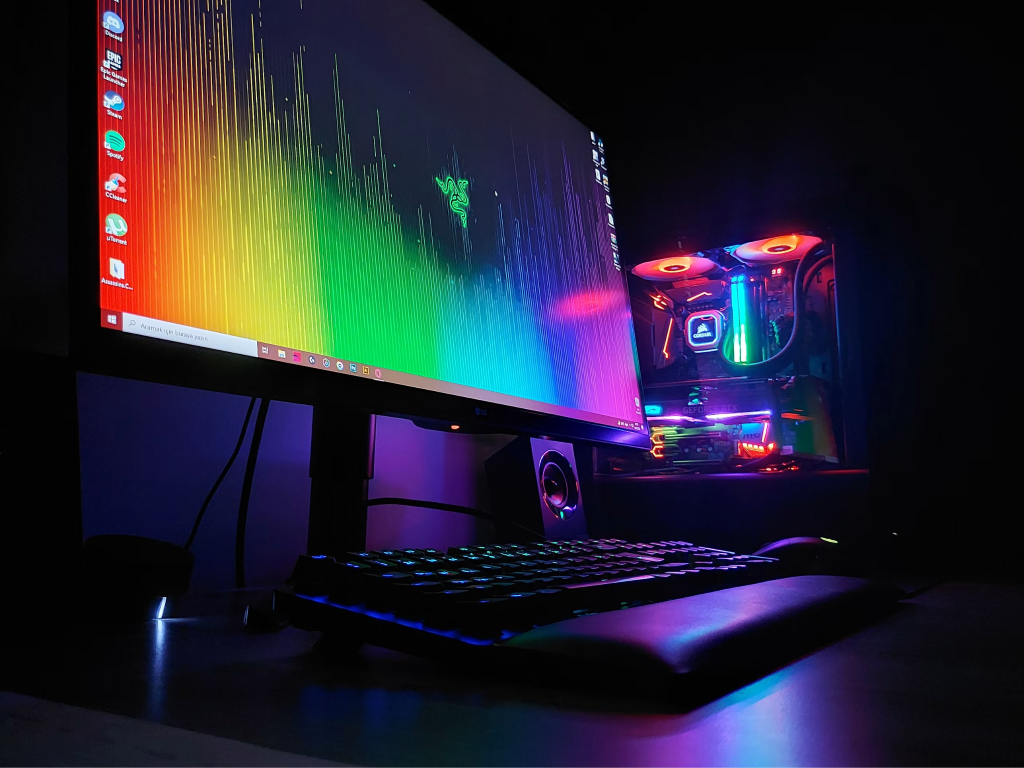
Buying a graphics card feels exciting until the shiny upgrade meets an old, sluggish screen. At that moment it becomes clear that the monitor finishes the job your GPU starts. Choose well and motion looks silky even after midnight; choose poorly and every flick or scroll seems to stutter. Over at x3bet casino, where blink-and-you-lose rounds never pause, players trade tales of missed shots that turned out to be monitor issues, not reflexes. So what matters most when you’re staring at spec sheets filled with numbers?
Refresh Rate: More Than Just a Big Number
Marketing teams love huge digits, yet the refresh rate is less about bragging rights and more about feel. A 60 Hz panel redraws 60 times each second; double that to 120 Hz and the image already looks far smoother. Push to 240 Hz and fast crosshair swings stop blurring into streaks if your PC can keep up.
Small caveat: if your favourite games hover around 110 frames per second, spending for a 240 Hz panel brings limited benefit. Better to hit a steady 144 Hz with crisp colour than chase 360 Hz on a dull screen that tires the eyes.
When Extra Hertz Earn Their Keep
- online shooters where every millisecond matters
- high-speed racing titles that cover ground fast
- rhythm games demanding frame-perfect taps
Response Time: The Hidden Blur Factor
Refresh rate tells you how often a picture changes; response time reveals how cleanly each frame appears. Measured in milliseconds (ms), it tracks how swift a pixel shifts between shades. A slow panel might claim 144 Hz, yet still smear motion because pixels lag behind.
Look for honest response-time charts from reviewers, not just “1 ms” in bold. Balanced overdrive settings, where pixels move quickly without unflattering halos, usually feel best in real play.
Five Checks Before Paying Extra
- Does your GPU push at least 75 % of the monitor’s refresh rate in your main game?
- Is the panel type (IPS, VA, OLED) known for colours you need—say, photo work at noon?
- Do reviews show low input lag alongside the headline numbers?
- Can the stand lift, tilt, and swivel to match your chair height?
- Are you sensitive to flicker or blue light? If so, verify the screen offers both protections.
Resolution, Aspect Ratio, and Real-World Space
Everybody loves 4K screenshots, yet those extra pixels ask for serious horsepower. If you own a mid-tier GPU, a sharp 1440p screen at 144 Hz often delivers smoother play than a choppy 4K 60 Hz option. Also think about desk distance: a 27-inch 1440p panel looks razor-sharp at arm’s length, while a 32-inch 1080p screen may show chunky pixels.
Ultra-wide formats stretch horizons in racing and simulation games and free space for timelines or chat windows. They do, however, complicate competitive play where standard 16:9 fields keep everyone framed the same way.
Comfort Features You’ll Notice After Week One
Eyes and posture complain quietly, then suddenly. A height-adjustable stand keeps your neck straight; a matte coating cuts glare from the afternoon sun. Some monitors bundle USB-C, letting one cable feed video, power a laptop, and charge your phone. These little conveniences rarely make headlines yet change daily quality of life.
Small Comfort Tweaks That Make A Big Difference
- slender bezels so dual screens sit edge to edge
- built-in KVM switch for swapping keyboard-mouse between work PC and gaming rig
- rear headphone hook (no more cable tugging)
- ambient-light sensor that softens brightness after sunset
- detachable shading hood if your desk faces a window
Adaptive Sync and Strobing: Smoother or Clearer?
Adaptive-sync tech FreeSync or G-Sync matches monitor refresh to game frame rate, reducing tearing. Good news: many mid-range IPS screens now handle both green and red teams without costly modules. Back-light strobing (sometimes called blur reduction) sharpens fast motion by turning the light on and off between frames. It looks great in shooters yet can dim brightness. Test both modes; your eyes will tell you which feels right.
Quick Testing Tips Before You Commit
Store displays loop bright demos that hide flaws. If possible, load a grey test image to spot back-light bleed, then drag a dark block across a white background to reveal ghost trails. Scroll black text on white to sense blur. Thirty seconds of hands-on beats hours of spec-sheet reading.
Wrapping Up
A monitor should last through two, maybe three, GPU upgrades, so plan for more than raw hertz. Make sure the stand fits your posture, the panel shows accurate colour, and real-world frame rates suit the refresh ceiling. Nail those basics and you’ll enjoy crisper tracking on x3bet casino, cleaner laps in racing sims, and healthier eyes when the credits roll.