
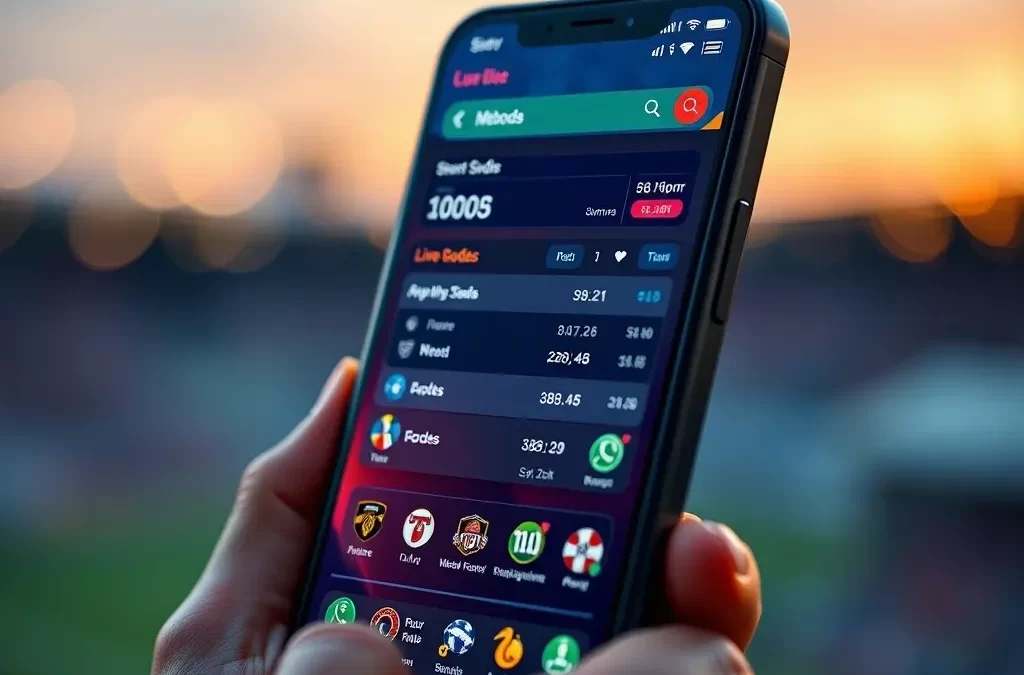
Live sports sessions on a phone are usually short. A match gets checked, a couple of markets get scanned, then attention moves back to scores, chats, or a busy commute. That rhythm rewards products that stay stable under refresh and interruptions. When the interface shifts, reloads awkwardly, or loses place after a back action, users spend time re-orienting instead of making a clean choice.
A home screen that stays readable when things update
The first screen should behave like a steady catalog, not a moving target. Navigation stays pinned. Match cards keep their positions. Updates land inside reserved space, so buttons do not slide under a thumb. Within that kind of structure, using a desi betting app flow inside the lobby makes sense when match status, market labels, and basic account context remain visible without extra taps. If a live tag appears, it needs to mean the same thing everywhere, and the same applies to market naming. Inconsistent labels slow people down because every screen starts feeling like a new layout to learn.
A stable home screen also respects the back path. If a market view is opened and then closed, the list should return to the same scroll position with the same filter state. That one detail cuts down on frantic scrolling during live windows. It also reduces mis-taps, because users are not forced to scan from the top while content is refreshing in the background.
Quiet refresh that changes numbers without moving the page
Live data must refresh, but refresh should not reorder the interface. Odds can change in place while spacing stays identical. A match card can update its status without jumping above unrelated cards. If a market becomes unavailable, a clear disabled state is better than removing the row and shifting everything upward. These are small mechanics, yet they decide whether users trust what they see from one second to the next.
The clean pattern is a fixed grid where values update inside stable slots. Digits align, separators stay consistent, and color cues never flip meaning between screens. When a refresh is taking longer, the UI should show a calm in-progress cue and keep controls from accepting repeated taps. Uncertainty is what causes duplicate actions. Clear state is what prevents them.
Tap behavior that prevents double actions
On mobile, people tap twice when the interface stays silent. A tap should be acknowledged immediately, then the action control should lock until the transition completes. If a market screen needs a moment to load, a short progress cue is better than a blank pause. When controls remain active during loading, duplicate requests become common, and that creates messy states that are hard to explain later.
A reliable flow also keeps tap targets comfortable. Market chips and buttons need spacing for real thumbs, especially when scrolling quickly. The selected state must be obvious, and the back action must behave consistently. Returning from a market should restore the same list view, not a default screen that forces the user to rebuild context.
Session recovery that feels boring in a good way
A phone call, a lock screen, or a quick app switch should not scramble the session. Returning should show the last confirmed screen state, with the same structure and the same labels. If validation is still running, the interface should keep the last confirmed view visible and show a clear waiting state until the update arrives. Replaying animations as if something new happened can create doubt. The calmer approach is to show the confirmed result once and keep it stable.
This same principle applies to refresh cycles. If the signal dips, the interface should hold the last confirmed values rather than flashing new numbers and then changing them again immediately. Stability is what keeps users from chasing the screen.
Filters and search that behave predictably
A match list becomes easier to use when sorting rules stay stable. If the list is sorted by live matches, it should stay that way until the user changes it. Filters should show as active, and clearing them should restore the original view without reshuffling unrelated sections. Search needs consistency too. Running the same query twice in the same session should not produce a different ordering that looks random.
A practical way to evaluate this is to look for “place memory.” After opening a match and returning, does the list land where it left off. After applying a filter and backing out of a market, is that filter still active. When the answer is yes, users stop treating the lobby like a puzzle and start using it like a tool.
A quick checklist that catches real problems
A short routine on a regular phone can reveal whether the experience will hold up during live play. These checks stay grounded in behavior rather than opinions, so they are easy to verify and easy to describe in a review.
- Match cards keep their positions while values refresh in place.
- Back navigation returns to the same scroll position and filter state.
- Tap feedback appears instantly, and controls lock during transitions.
- Filters apply and clear without reshuffling unrelated sections.
- Rotation or a brief app switch does not reset the view or move tap targets.
- If the signal dips, the last confirmed state stays visible until updates return.
What makes people return during the next match
Most live sessions are repeat visits. Users check a match, step away, then come back a few minutes later. A product earns that pattern by staying consistent: stable category order, readable labels, quiet refresh, and recovery that restores the last confirmed view. When tap feedback is immediate and transitions prevent double actions, decisions feel deliberate even in short bursts.
The win is simple. The screen stays still while information updates. The path back lands where it should. The interface does not demand extra attention, so the session stays easy to manage on a phone that is doing what phones always do.