
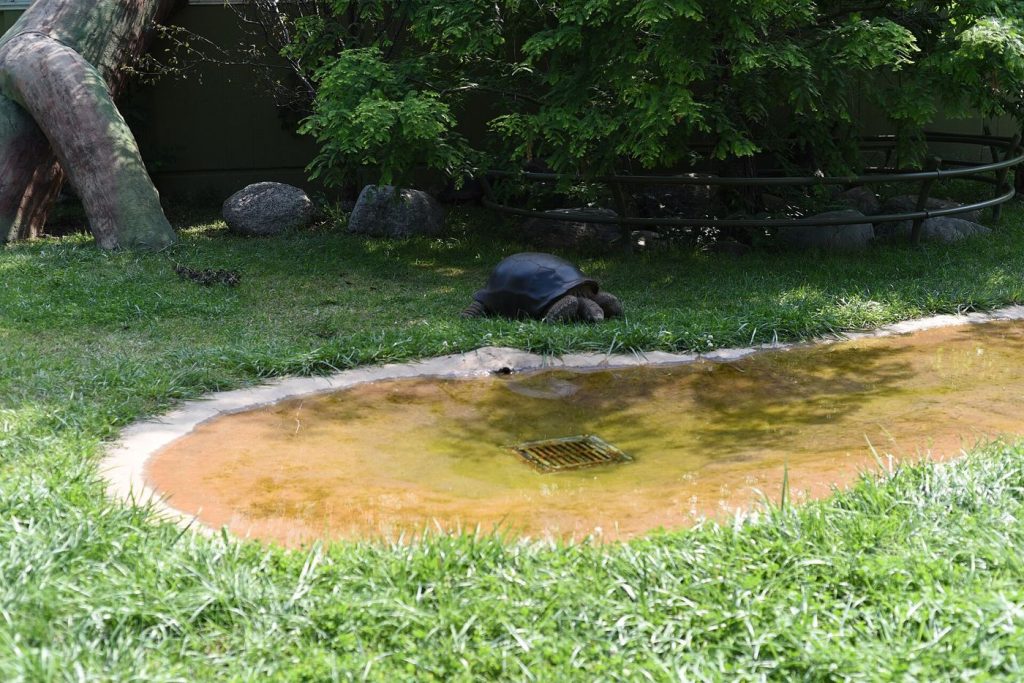
At an astonishing 194 years old, Jonathan the giant tortoise is the world’s oldest living land animal, and scientists may have finally uncovered the secrets behind his extraordinary lifespan. The findings were reported on 22 November 2026. Jonathan lives on the island of Saint Helena in the South Atlantic, where he hatched around 1832, before the invention of the telephone or the light bulb. He has outlived every other known land animal, surviving on a diet of grass, leaves and vegetables, and he remains active despite being blind and having lost his sense of smell. His keepers say he still enjoys walks around the garden and the attention of visitors who come to see him.
What the Evidence Shows
Researchers studying Jonathan and other long-lived tortoises have found clues in their genes and their slow, steady biology. Giant tortoises burn energy slowly, repair their cells efficiently and show little sign of the ageing that wears down most animals. Their immune systems stay strong for decades, and their cells resist the damage that leads to cancer and disease. Scientists hope that understanding how tortoises age so slowly could point to new ways of keeping human bodies healthier for longer. For now, Jonathan continues to graze in the grounds of the governor’s residence, a living link to the nineteenth century. Jonathan’s story has made him a celebrity, with visitors travelling from around the world to meet him. Reporting and analysis from sources such as NASA track the same developments, and specialists following Jonathan the giant tortoise say the direction is now consistent across independent lines of evidence.
The Wider Context
Funding bodies are watching Jonathan the giant tortoise closely because the work sits at the junction of basic curiosity and practical return. Grant panels increasingly ask for a path from discovery to application, while researchers push back that the most valuable uses of fundamental science are rarely the ones written into the original proposal. The tension is productive when both sides stay honest about timescales.
What Happens Next
The long view on Jonathan the giant tortoise is that fields advance by accumulation rather than by single announcements. This result adds a solid, checkable piece to a structure many teams are building, and its authors have shared their data so the piece can be tested from every side. That is how the picture eventually becomes reliable enough to act on. You can follow related developments in our coverage of science.
It is also worth remembering how quickly the picture in this area has changed before. Positions that looked settled a few years ago have been revised as new data arrived, and the same humility is appropriate now. The strongest coverage of this subject, and the most useful advice, tends to come from sources that update their views openly when the facts move, rather than defending an earlier position long after it has stopped fitting the evidence available.
