
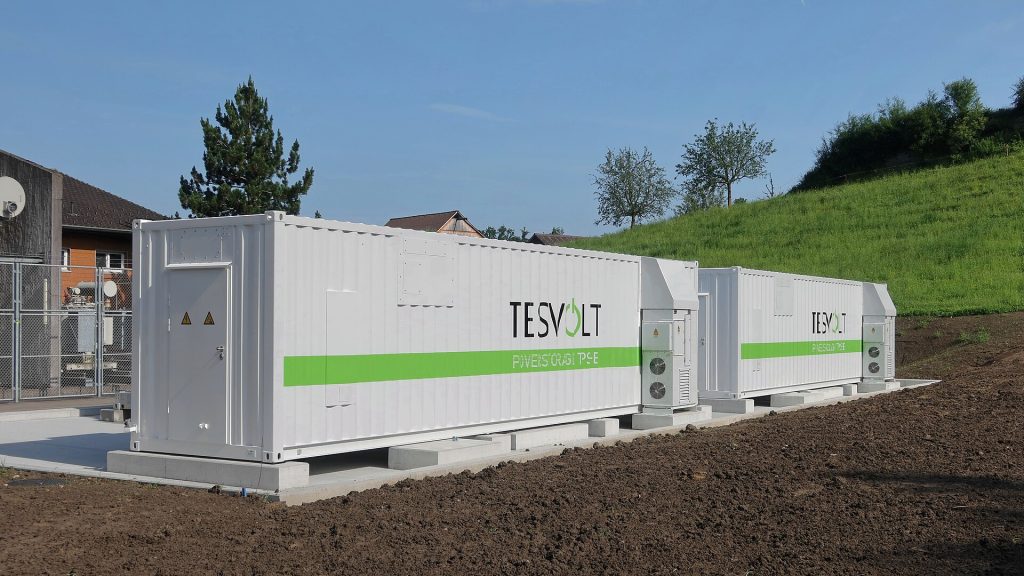
The fastest-growing piece of the world’s electricity systems is not a power station at all. Grid-scale batteries — shipping-container-sized units installed by the hundred at substations, solar farms and wind sites — are being deployed at a record pace, and in several regions they now supply more power during the evening peak than gas plants built for exactly that job.
The appeal is straightforward. Solar generation floods grids at midday and vanishes at sunset, just as demand climbs. Batteries soak up the surplus, sometimes at negative prices, and discharge into the expensive evening hours. For readers of our home and grid energy coverage, the same logic now operates at household scale with rooftop solar and a wall-mounted battery; the grid projects are that idea multiplied by thousands.
Why the Numbers Broke Records
Costs did the heavy lifting. Lithium-ion battery pack prices have fallen dramatically over the past decade, helped by electric-vehicle manufacturing scale, and a newer chemistry, lithium iron phosphate, trades some energy density for lower cost, longer life and better safety — a trade grid operators happily accept for stationary storage. The International Energy Agency’s analysis at iea.org identifies batteries as the fastest-growing clean energy technology, with deployments concentrated in China, the United States and Europe.
Policy and market design followed. Capacity markets and ancillary-services markets now pay batteries for what they do best: responding in milliseconds to frequency wobbles, holding reserve and shifting energy across hours. In Texas, batteries have repeatedly steadied the grid during heatwaves and plant outages; in California, they routinely become the largest single source of supply in the early evening.
What Batteries Change on the Grid
The deepest effect is on solar’s value. Without storage, each new solar farm depresses midday prices further, undermining its own economics. Storage restores the spread, which is why most new solar projects in sunny markets are now built as hybrids with batteries attached. Wind benefits too, with storage filling calm evening gaps that once defaulted to gas.
Batteries also defer wires. In congested areas, a well-placed installation can postpone a substation or transmission upgrade by shaving the few dozen peak hours a year that drive the investment. Network planners increasingly compare a battery quote against a building project — a contest that barely existed five years ago.
The Limits Coming Into View
Most grid batteries still store two to four hours of energy. That handles the daily solar cycle beautifully and a passing cloud, but not a week of still, grey winter weather. Longer-duration technologies — iron-air, flow batteries, thermal storage and green hydrogen — are competing to fill that multi-day gap, with the US Department of Energy’s programmes at energy.gov funding demonstrations of ten-to-one-hundred-hour systems.
Supply chains and siting bring their own frictions: transformer shortages slow connections, fire-safety rules are tightening after a handful of container fires, and connection queues in several countries now stretch for years. Recycling, too, must scale alongside deployment if the industry is to keep its environmental claim intact.
What It Means for Households
For bill-payers, the effect arrives indirectly but really: cheaper evening peaks, fewer price spikes, and tariffs that increasingly reward using power when batteries and renewables make it abundant. Time-of-use pricing, smart EV charging and home batteries are the household end of the same system-wide shift towards flexibility.
The Bottom Line
Record battery deployment marks the moment storage stopped being an accessory to renewable energy and became infrastructure in its own right. The next contest is duration — storing sunshine not just for the evening but for the week — while another frontier, explored in our piece on enhanced geothermal drilling, aims to make clean power available around the clock from the ground itself.
