
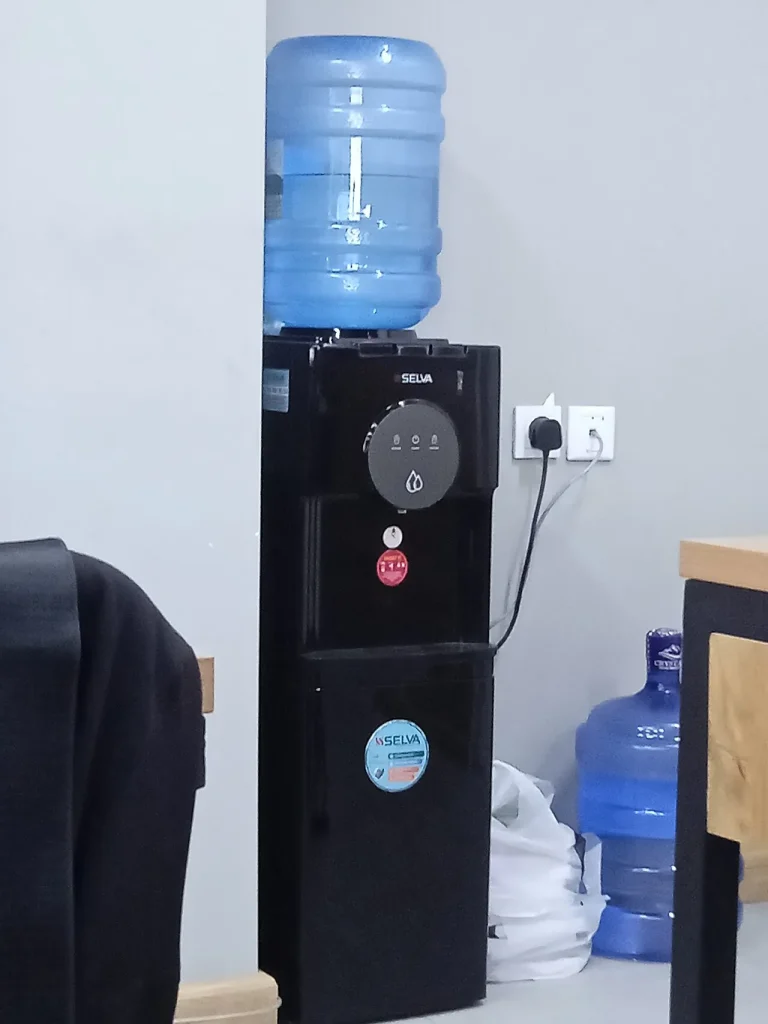
The office water ritual is universal: the cooler in the corner, the crate of bottles for meetings, the personal bottle on every desk. A workplace is where many adults drink most of their water — which makes the office a front line for the microplastics question. A survey of 15,000 people across 81 countries recently found bottled water consumption persists despite widespread awareness of microplastics; the researchers point to convenience and habit as much as to safety concerns. Nowhere is that clearer than at work.
Our sustainability coverage examines what the science does and does not say, and how workplaces are responding.
What researchers know — and do not
Microplastics — tiny plastic particles shed from packaging, textiles and degraded waste — have been detected in air, food and water, including bottled water itself. The irony is built into the workplace habit: the bottle chosen partly to avoid contamination is itself a documented source of particles, released from the plastic and the cap, especially with heat and reuse.
What remains unsettled is the health significance. Researchers are actively studying how particles move through the body and whether typical exposure levels cause harm; honest summaries describe a field with confirmed exposure and unresolved consequences. The science referenced in the survey discussion is indexed at ScienceDirect, and the measured tone matters: certainty either way would be premature.
Why the office defaults to bottles
Workplace bottled water persists for practical reasons. Employers want a visible, low-effort duty-of-care signal; facilities teams want one contract and no plumbing projects; meeting culture wants sealed bottles on the table. The 81-country survey’s finding — awareness does not change behaviour — maps perfectly onto offices, where nobody individually owns the water decision.
There is also trust. In buildings with ageing pipes or a past contamination scare, bottled water feels like the safe managerial choice, even where the tap tests fine. Habits formed around a scare outlive the scare by decades.
What workplaces are changing
The pragmatic shift visible in many offices is filtration: plumbed-in filtered dispensers and refill stations that remove the plastic while keeping the convenience and the visible safety signal. Employers frame it as sustainability and cost policy at once — crates of bottles are expensive logistics as well as a waste stream — and staff get the sealed, chilled experience without the bottle.
Better workplaces pair the hardware with transparency: posting water-quality test results where the cooler used to stand, so trust is built on data rather than packaging. For hybrid teams, some extend the logic with allowances or guidance for home filtration instead of shipping bottles.
A balanced takeaway for employers
The science does not license panic, and it does not license complacency either. Exposure to microplastics is real, bottled water contributes to it, health effects are under active study, and the office is one of the easiest environments to change because the decision is centralised.
For employers, the water cooler is a small, visible place to practise evidence-led sustainability: filter, test, publish, and let the meeting-room bottle retire. Employees notice what an organisation does at the cooler — it signals how seriously the rest of its commitments are meant.
The bottom line at the cooler
Workplace water is a small policy with an outsized signal. It touches every employee every day, it embodies what an organisation believes about evidence, and — as the 81-country survey suggests about bottled habits generally — it will not change through awareness alone. It changes when the convenient option and the considered option become the same option.
The water cooler survived the open-plan office, the app era and the hybrid week; it will survive the microplastics debate too. What changes is the specification: filtered, plumbed and maintained beats bottled and delivered on cost, convenience and now on the particle question itself. Facilities teams making that switch are not chasing a headline — they are removing one, quietly, from every future sustainability report.
